

Wednesday, November 29, 2006

Le mouton de l’Aïd aux USA.


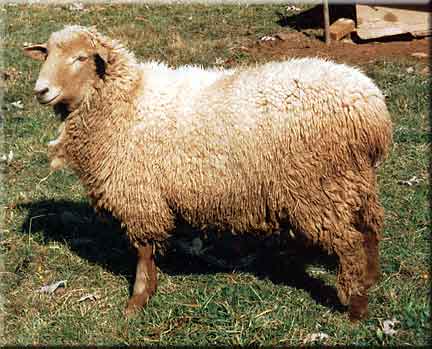
Je viens de découvrir que le mouton Tunisien est un animal fort apprécié aux US. En effet il s’avère qu’il y a une race qui s’appelle « American Tunis sheep » qui a été importé de Tunisie au 19eme siècle. Il parait même que le président Thomas Jefferson, auteur principal de la déclaration d'indépendance et un des pères de la constitution américaine en était un des importateurs !!J’étais agréablement surpris par cette nouvelle jusqu’au moment ou j’ai appris que cette race et a été mélangé avec des races européennes pour l’améliorer et faire réduire la graisse de la queue (Elliyya). Un crime pour tout Tunisien qui se respecte :-).

The Tunis is one of the oldest breeds indigenous to the United States. It is a medium-sized meat-type sheep characterized by creamy wool, copper-red colored faces & legs, pendulous ears, and minor fat deposits over the dock area.[...]

The earliest documented importation occurred in 1799. They came as a gift to the U.S. from the ruler of Tunisia, his highness the Bey of Tunis, and were entrusted to the care of Judge Richard Peters of Pennsylvania who became an outspoken advocate of the breed. By the 1820's, Tunis were in much demand by butchers in eastern Pennsylvania. Descendants of Judge Peters' sheep, as well as additional importations of fat-tailed sheep became established in Maryland, Virginia, North and South Carolina, and Georgia. Thomas Jefferson imported "broad-tailed" sheep and kept them for many years.
Source

Si cette race est fort appréciée aux US, j’espère que cela donnera des idées à nos éleveurs locaux ;-)

Tuesday, November 28, 2006

Question a propos de la poste tunisienne.

Est ce que quelqu'un pourrait me dire si il ya un temps garanti de livraison d'une lettre normale (<20g) par la poste tunisienne par voie normale? J'ai cherché partout sur leur site, ils ne le disent nulle part.
Merci

Démocratie et Religion.

Depuis des décennies, plusieurs pays justifient le fait de ne pas implémenter un système démocratique transparent par la peur de mettre au pouvoir un parti qui va a l’encontre de la sécurité nationale du pays !!! Cette justification est bien sûr adressée aux grandes démocraties de ce monde qui leur demandent qu’ils permettent à leur peuple de s’exprimer et avoir un droit de vote sur les lois qui régissent leur vie.

Bien sûr et on le sait tous que la vrai raison est de se maintenir au pouvoir à vie, mais beaucoup de pays occidentaux paraissent donner raison a ces dictatures, surtout après le 11 septembre et le dernier essai fait par Bush en Palestine (et en Egypte) et qui a abouti a des islamistes dans le gouvernement et ceci fait peur a certains

Au fait, même en étant conscient de la mauvaise fois de ces gouvernements, je suis tout à fait d’accord qu’un parti politique ne doit pas être basé sur la religion, mais pas pour les mêmes raisons.

Un parti doit être basé sur un ensemble de valeurs humaines, sociales et économiques auxquelles peut s’identifier n’importe quel citoyen, qu’il soit homme, femme, noir, blanc, musulman ou athée. Limiter un parti aux personnes pratiquant la même religion, c’est comme le limiter à ceux qui sont de la même race ou du même sexe et cela à mon avis est aberrant. On peut être libéral et musulman ou conservateur et juif, l’un ne doit pas exclure l’autre. Au fait je trouve que cela est dangereux car implicitement celui qui est opposé a un parti religieux va avoir un sentiment de culpabilité et de peur alors qu’il est un adepte de la même religion que les membres de ce parti. Implicitement il va y avoir des handicaps sérieux à discuter n'importe quel sujet puisque les lois divines peuvent être interprétées de mille manières et elles sont surtout indiscutables, on doit les appliquer ou on va en enfer (religions monothéistes) !!! Vous voyez bien à quel genre de débat cela peut aboutir.

Personnellement je trouve que démocratie et religion ne se mixent pas bien. On peut dans une nation démocratique s’inspirer de valeurs culturelles ou religieuses, mais construire une société moderne basée sur l’interprétation par quelques uns de la religion, c’est une tache qui me semble être vouée à l’échec. La religion doit rester au niveau individuel.

Je suis musulman mais je ne veux pas militer dans un parti politique musulman. Les musulmans doivent être représentés dans tous les partis (quand ils existeront), comme les femmes, les hommes, les blancs ou les noirs.

De toute façon, cette discussion est un peu préliminaire vu l’état des lieux de ces pays vis-à-vis de la liberté d’expression et l’encouragement du débat :-(

Monday, November 27, 2006

NBC: Iraq in civil war; White House disagrees

For the first time a major TV network in the US(NBC), described the situation in Iraq as a civil war, resulting in an official disagreement by the white house. This is very important to understand how the americans get their news. What is obvious to the rest of the world is not for americans who generally get their news from such networks.

WASHINGTON (Reuters) - NBC News on Monday branded the
Iraq conflict a civil war -- a decision that put it at odds with the White House and that analysts said would increase public disillusionment with the U.S. troop presence there.

NBC, a major U.S. television network, said the Iraqi government's inability to stop spiraling violence between rival factions fit its definition of civil war.[....]
Several analysts said NBC's decision was important as the administration would face more pressure to pull U.S. troops out of Iraq if the U.S. public comes to view the conflict as a civil war.

The decision "certainly is a major milestone," said Ted Carpenter, vice president for defense and foreign policy studies at the libertarian Cato Institute.

"That does change the terminology and is likely to change the perspective of viewers, and one suspects other media outlets will sooner or later follow suit."

Public weariness with the conflict -- which has now lasted longer than U.S. involvement in World War Two -- helped Democrats take control of Congress from Bush's Republican Party in November 7 elections.

Analysts said Americans would not tolerate U.S. troops being used as referees between warring Iraqi factions.

NBC: Iraq in civil war; White House disagrees

Sunday, November 26, 2006

Palestine, peace not APARTHEID.


Jimmy Carter,
Winner of Nobel prize and ex president of the United States of America (Democrat).

The best offer to the Palestinians [at Camp David in December 2000]--by Clinton, not Barak--had been to withdraw 20 percent of the settlers, leaving more than 180,000 in 209 settlements, covering about 10 percent of the occupied land, including land to be "leased" and portions of the Jordan River valley and East Jerusalem.

The percentage figure is misleading, since it usually includes only the actual footprints of the settlements. There is a zone with a radius of about four hundred meters around each settlement within which Palestinians cannot enter. In addition, there are other large areas that would have been taken or earmarked to be used exclusively by Israel, roadways that connect the settlements to one another and to Jerusalem, and "life arteries" that provide the settlers with water, sewage, electricity, and communications. These range in width from five hundred to four thousand meters, and Palestinians cannot use or cross many of these connecting links. This honeycomb of settlements and their interconnecting conduits effectively divide the West Bank into at least two noncontiguous areas and multiple fragments, often uninhabitable or even unreachable, and control of the Jordan Valley denies Palestinians any direct access eastward into Jordan. About one hundred military checkpoints completely surround Palestinians and block routes going into or between Palestinian communities, combined with an unaccountable number of other roads that are permanently closed with large concrete cubes or mounds of earth and rocks.

There was no possibility that any Palestinian leader could accept such terms and survive, but official statements from Washington and Jerusalem were successful in placing the entire onus for the failure on Yasir Arafat[....]

In April 2003 a "Roadmap" for resolving the Israeli-Palestinian conflict was announced by U.N. Secretary-General Kofi Annan on behalf of the United States, the United Nations, Russia, and the European Union (known as the Quartet).The Palestinians accepted the road map in its entirety but the Israeli government announced fourteen caveats and prerequisites, some of which would preclude any final peace talks[....]

International human rights organizations estimate that since 1967 more than 630,000 Palestinians (about 20 percent of the total population) in the occupied territories have been detained at some time by the Israelis, arousing deep resentment among the families involved. Although the vast majority of prisoners are men, there are a large number of women and children being held. Between the ages of twelve and fourteen, children can be sentenced for a period of up to six months, and after the age of fourteen Palestinian children are tried as adults, a violation of international law[...]

The United States has used its U.N. Security Council veto more than forty times to block resolutions critical of Israel. Some of these vetoes have brought international discredit on the United States, and there is little doubt that the lack of a persistent effort to resolve the Palestinian issue is a major source of anti-American sentiment and terrorist activity throughout the Middle East and the Islamic world[...]

The bottom line is this: Peace will come to Israel and the Middle East only when the Israeli government is willing to comply with international law, with the Roadmap for Peace, with official American policy, with the wishes of a majority of its own citizens--and honors its own previous commitments--by accepting its legal borders. All Arab neighbors must pledge to honor Israel's right to live in peace under these conditions. The United States is squandering international prestige and goodwill and intensifying global anti-American terrorism by unofficially condoning or abetting the Israeli confiscation and colonization of Palestinian territories.
Excerpts from the book from various web sites.


Q: In your book, you argue that ‘because of powerful political, economic, and religious forces in the United States, Israeli government decisions are rarely questioned or condemned.’ Can you explain that more fully?

A: I’ve been all over the Holy Land, I’ll call it, just for a kind of a shorthand description, since the 1970s — the last 30 or 40 years — from Lebanon down to the Sinai. And I’ve been up into the Golan Heights three times, and I’ve conducted three elections there — and I’ve seen the coverage given to Israel’s activities in Europe and in Israel itself — a highly contentious debate over [Israel]. There is no such debate in the United States. There’s not any debate in the Congress. There’s not any debate in the White House, at least since George Bush Sr. and I were there, and in the news media of the United States there is very rarely any editorial comment that would criticize some of the practices of Israel which I consider to be deplorable — and that is the persecution of the Palestinians, and the occupation and confiscation and the colonization of Palestinian land. So there’s no open debate in this country if it involves any criticism of the policies of the Israeli government, even though many people in Israel debate and condemn some of the policies of the right-wing governments under Sharon and Netanyahu and others.

Q: Lately there has been a lot of discussion about the role of the ‘Israel lobby.’ Can you say a little bit about how that impacted you as president? Has it changed over time?

A: Well, I think the Israel Lobby — so-called to use your phrase, that’s not my phrase — is much stronger now and much more effective now than it was when I was in office. I felt, for instance, that we should sell F-16 airplanes to Saudi Arabia so Saudis could defend themselves against threats from Iran, and Aipac and others were adamantly against it, but we finally prevailed. And I called within three months of when I went into office for a Palestinian homeland. And I worked for the Camp David accords, which called for Israel’s political and military withdrawal from the occupied territories, and so forth, and I think that that kind of independence was also exhibited by George Bush Sr., who condemned Israeli settlements in the West Bank and even withheld funds from Israel, which I never did, by the way.… That’s almost an impossibility now in the present political environment of America.

Carter discussing his book on forward.com

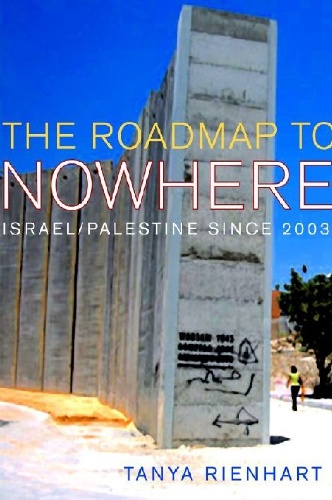
The roadmap to nowhere.


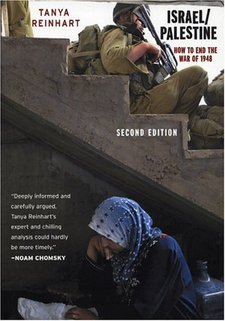
Tanya Reinhart is a professor at Tel Aviv University and the University of Utrecht. She is author of Israel/Palestine: How to End the 1948 War (Seven Stories Press, 2002) and The Road Map to Nowhere: Israel/Palestine Since 2003.

Israel backed by mainstream Western media - describes its war against the Palestinians as a war of defence, a necessary response to Palestinian terror, a noble instance of the global war against terrorism. It is amazing how still now, after two years of massive Israeli destruction of the Palestinian society, so little is known about the real facts of how this war developed, and what Israel's role in it is[....]

Ever since the Palestinian territories were occupied in 1967, the Israeli military and political elites have deliberated over the question how to keep maximum land (and water) with minimum Palestinian population. A simple solution of annexing the heavily populated Palestinian land would have created a "demographic problem" - the fear that a Jewish majority could not be sustained. Therefore, two basic approaches were formed. The Alon plan of the Labor party proposed annexation of 35-40 percent of the territories, and either a Jordanian rule, or some form of autonomy for the rest of the land, to which the Palestinian residents will be confined. In the eyes of its proponents, this plan represented a necessary compromise. They believed it would be inconceivable to repeat the "solution" of the 1948 Independence war, when much of the land was obtained "Arab-free", following mass expulsion of the Palestinian residents. The second approach, whose most vocal spokesman was Sharon, strived to get more. In its extreme realization it maintained that it should be possible to find more acceptable and sophisticated ways to achieve a “1948 style" solution. It would only be necessary to find another state for as many Palestinians as possible. "Jordan is Palestine" was the phrase Sharon coined in the 1980's.[...]

Amid the propaganda, a theme that had already emerged in October 2000 was the analogy linking present circumstances to the war of 1948. Major General Moshe Ya'alon, then deputy chief of staff (and the present chief of staff), explained that "this was Israel's most critical campaign against the Palestinians, including Israel's Arab population, since the 1948 war - for him, in fact, it is the second half of 1948" (Amir Oren, Ha'aretz, November 17, 2000). After two years of brutal Israeli oppression of the Palestinians, it is hard to avoid the conclusion that the leading military and political circles in Israel that produced this analogy still believe that "the second half" - a completion of the ethnic cleansing that started in 1948 - is necessary and possible.

Source of full interview